
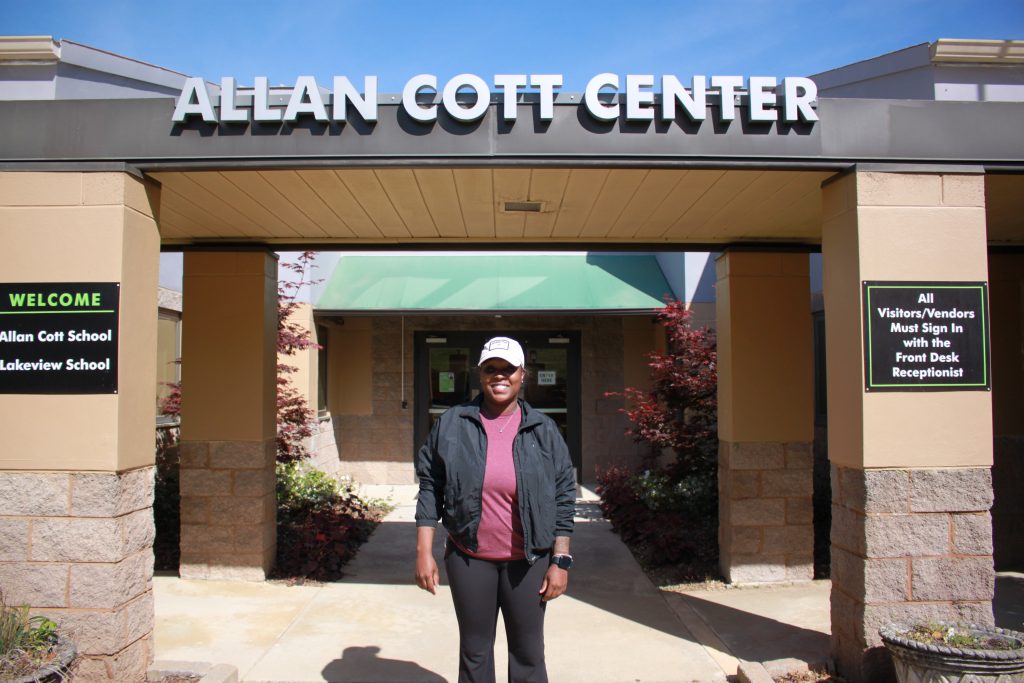
Every morning, Margaruitte Williams walks through the doors of Glenwood’s Allan Cott School with one unwavering intention: to make a difference.
That mindset reflects one of Glenwood’s core Model of Care principles: Create Positive Reactions. Whether she is helping a student navigate a difficult transition, stepping in during a moment of crisis or simply being a steady, patient presence, Margaruitte understands how she shows up matters.
“No day is the same,” she says. “I just come ready to work, ready to make a difference, even if it’s something small.”
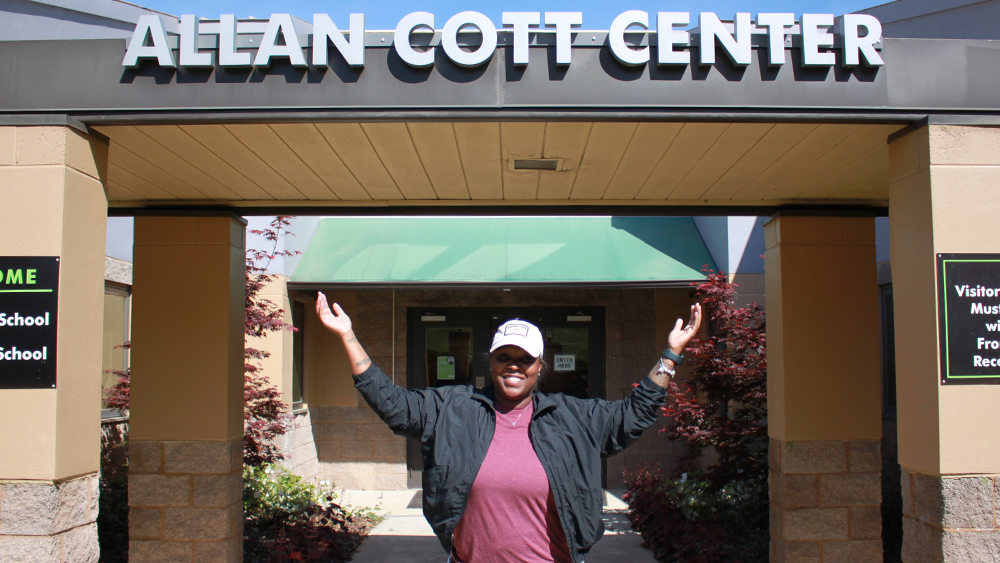
Founded in 1974 as Alabama’s first school dedicated to providing educational and therapeutic services for children with autism, Allan Cott School remains Glenwood’s founding program. Serving residential and day students ages 6 to 21, the school provides specialized instruction tailored to each student’s unique strengths.
As a lead behavior technician, Margaruitte works alongside teachers and fellow behavior techs to support students throughout the school day. She oversees the classroom schedule, steps in during crises and supports wherever needed.
“If you come in with the right mindset, I feel like the day will flow for you,” she says.
Without realizing it, Margaruitte is describing another Model of Care principle: Flow with the Force. At Allan Cott, flexibility is essential. Students are constantly growing, learning and navigating complex emotions. Plans shift. Moments escalate. Progress unfolds in unexpected ways. Margaruitte meets those moments with adaptability rather than resistance.
Before joining Glenwood, she worked at a day clinic serving children with autism, but something shifted when she learned that many Allan Cott students live at Glenwood full time.
“I fell in love with the thought of it,” she says. “I wanted to understand the kids more, understand the people more.”
That desire to understand reflects the heart of another Glenwood Model of Care principle: Find the Need. Beyond behavior plans and structured supports, Margaruitte looks deeper. What is this child trying to communicate? What are they feeling? What support do they truly need right now?
If you ask her about a moment when she knew she was making a difference, she will tell you about Skilynn.
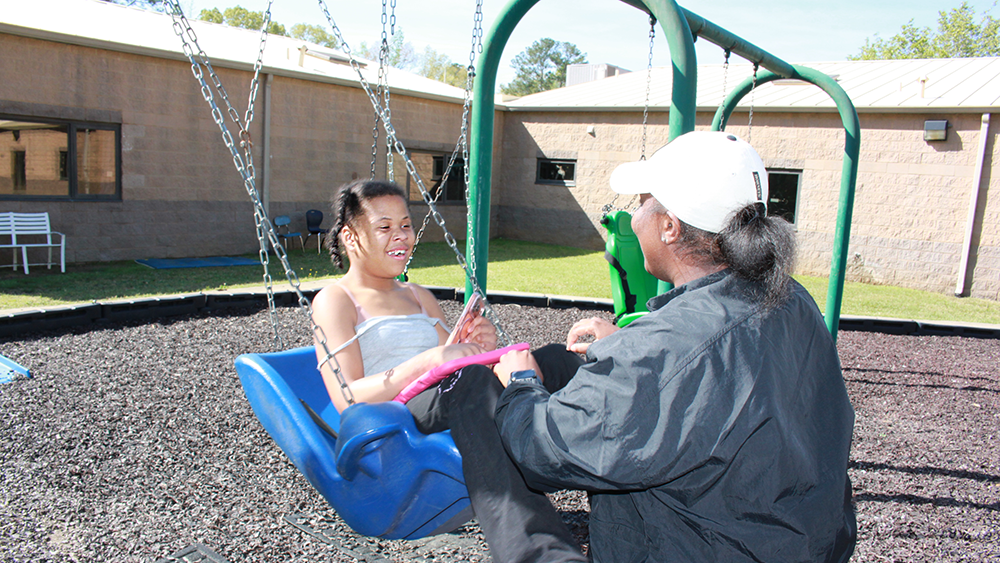
When Margaruitte met Skilynn, she was struggling with communication and showing dangerous behaviors for much of the school day, often in distress for 75 percent of her time at school. Skilynn was in a period of transition, growing older and learning about herself. The work was hard. The progress was slow.
“I think I probably met her at the toughest time of her life at Glenwood,” Margaruitte says.
When the team discussed who would provide Skilynn’s daily dedicated support, Margaruitte stepped forward.
“I knew I could make a difference in her life.”
There were days she felt overwhelmed. Days she wondered if she could keep going. But instead of reacting quickly or giving up in frustration, she practiced another core principle: Slow Down and Think.
“It was just showing up every day and being patient,” she says. “I wanted to show her: we can get through this together.”
Slowing down meant recognizing that what may look small to others is often monumental for the child. Holding an Augmentative and Alternative Communication (AAC) device for more than five seconds. Completing a transition. Using a word instead of a behavior. Each moment required intention, patience and trust.
Today, Skilynn enjoys more areas of the school. She uses her AAC communication device consistently. The progress that once felt impossible is now part of her daily life.
“She taught me what it was to show up every day and love a child I barely knew,” Margaruitte says. “To see where she is now, I’d do it again. I’d do it over and over again.”
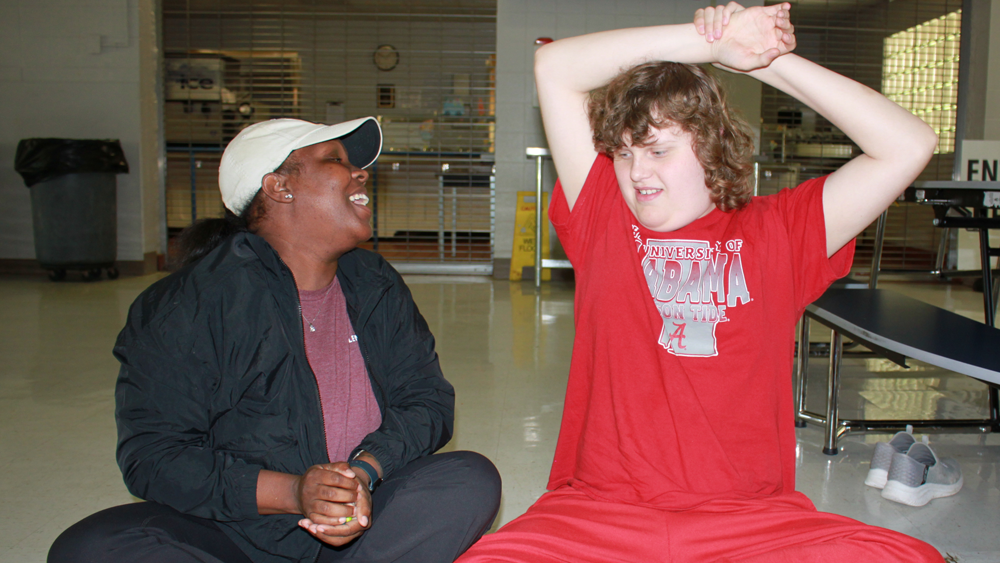
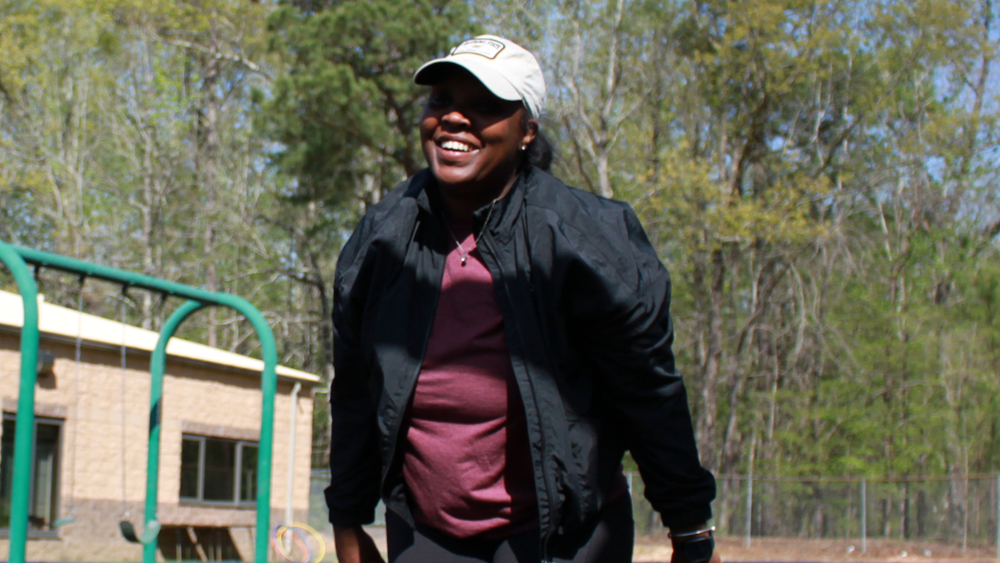
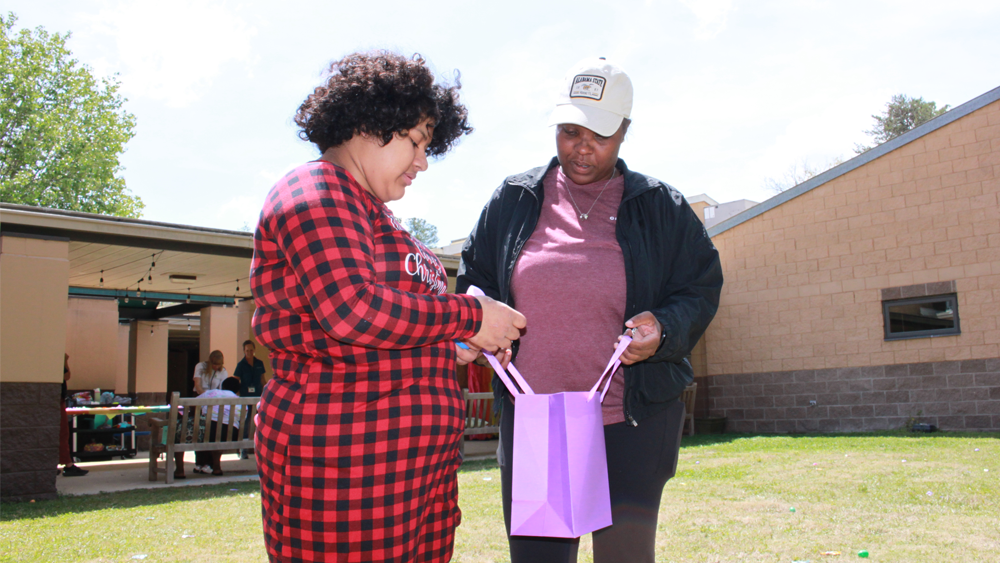
On the harder days, Margaruitte draws strength from the students and her colleagues who stand beside her.
“Knowing I’m going to show up and be with them, being consistent, knowing I’m making a difference, that keeps me going. And I could not do it without the people I work with.”
Working at Glenwood, Margaruitte sees her role as something much bigger than a job.
“I’m just grateful for the chance I get daily to support them and meet them exactly where they are,” she says. “It teaches us patience. It teaches us to love unconditionally, to accept unconditionally, to celebrate small moments.”