
Isaac’s name means “laughter,” and from the moment you meet him, it fits. He is bright, curious and endlessly expressive, an early talker whose vocabulary regularly surprises adults. At home, his intelligence was unmistakable. But when Isaac entered certain school settings, the very traits that made him remarkable collided with environments that were not built to support him.
Despite his cognitive strengths, Isaac struggled with behaviors that made school difficult. In the classroom, he could exhibit aggression and defiance and had trouble participating in group settings. One preschool after another told his parents the same thing: they could not meet his needs. Even specialized programs for children with higher support needs eventually turned him away.
The situation became so dire that Isaac’s mother, Emily, took several months of leave from work because there were simply no other options.
“It felt like we were constantly being told he didn’t fit,” Emily said. One former preschool described keeping Isaac enrolled as “forcing a square peg into a round hole.” The phrase stayed with her, not because it felt accurate, but because it revealed a deeper issue. “There are a lot of squares in the world,” she reflected, “that could fit if you just expanded the round hole with the right resources and support.”
That belief is at the heart of Glenwood’s kindergarten program.
When Isaac’s school district first suggested placement at Glenwood, Emily was afraid her son was being “punted” to a behavioral setting where his academic growth would stall. At the time, Isaac’s twin sister was coming home learning to read and write, while Isaac was still working on sitting at a table for more than three minutes.
“It really was one of my lowest points as a parent,” Emily said.
What she did not yet know was that Glenwood’s kindergarten program was built specifically for children like Isaac, children whose abilities are clear but who need additional support to reach their fullest potential in a traditional classroom.
Dr. Amelia Spencer, a program evaluation analyst at Glenwood, holds a Ph.D. in early childhood special education and has years of experience teaching preschool and elementary-aged children. When she joined Glenwood, the initial plan was to explore needs for preschool and kindergarten aged children. But after listening to families and school systems across the region, she recognized a critical gap at the kindergarten level.
“A lot of these kids are COVID babies,” Dr. Spencer explained. “They may have been in and out of preschools or daycares, but they haven’t been in structured group settings with academic and behavioral expectations until they walk into public school. And when that happens, it often doesn’t go well.”
Glenwood’s kindergarten program serves children who already have academic skills. These are children who can read, do math, draw and problem-solve, but need additional behavioral and emotional support to use and grow those skills in a classroom setting. Too often, families hear a painful but candid response from preschools: We can’t take your child.
Glenwood was created to be the bridge in that moment. The program is not an endpoint, but a pathway back to a more successful school experience.
From Isaac’s first months at Glenwood, the difference was clear. The program operates with an intentionally high staff-to-student ratio, roughly one adult for every two children, with some students receiving one-on-one support. The environment is structured but nurturing, predictable but flexible. Routines are consistent. Transitions are carefully supported with verbal cues, visual schedules and rituals that help children anticipate what comes next.
One of the program’s most effective strategies is also one of its simplest: meeting children exactly where they are.
For Isaac, that meant Pokémon.
One afternoon, Emily found a thick binder in Isaac’s backpack. Inside were laminated pages filled with images of his favorite Pokémon characters, each paired with dotted lines for practicing writing their names. The binder was filled with customized, Pokémon-themed reading and writing exercises created just for him.
“I was so moved,” Emily said. “Someone took the time to learn what motivates him and used it as a bridge to teach him.”
That individualized approach extends beyond academics. Each day includes three structured circle times, one focused on academics, one on social-emotional learning and one on reflection. Children practice identifying emotions, discussing what went well and naming what felt hard. Classroom expectations center on being kind, respectful and safe. The program is also intentionally screen-free, which helps reduce meltdowns and keeps children engaged with each other.
The growth Isaac has experienced over the past year has been undeniable.
He has learned emotional regulation skills that now carry into his home life. When he feels overwhelmed, he sometimes retreats to a calm-down corner he created in his closet. Instead of escalating, he asks, “Can you help me calm down?” a sentence his parents never imagined hearing during moments of distress.
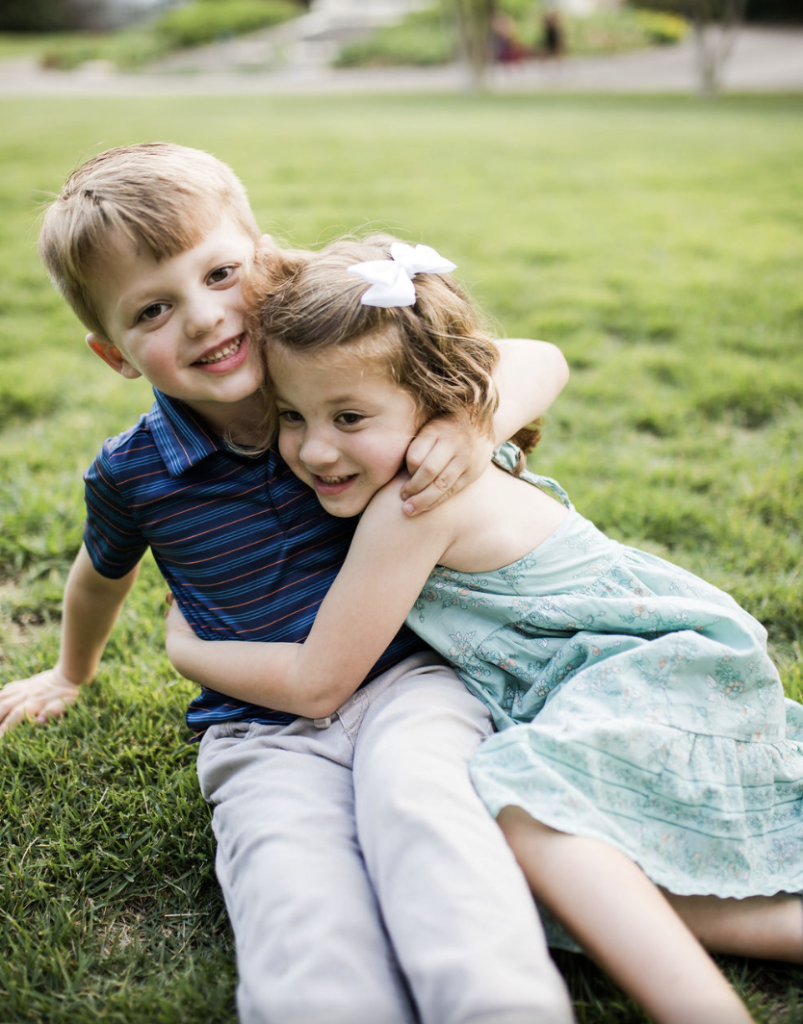
The changes have transformed daily life for the entire family. A year ago, Isaac and his twin sister had to be kept apart due to unpredictable aggression. Today, they play together on Saturday mornings, inventing stuffed-animal adventures while their parents sleep in.
“This is huge for us,” Emily said.
Isaac’s confidence as a learner has also flourished. During a recent visit to his grandparents’ house, Isaac asked to play chess. Emily tried to redirect him, assuming it would be too complex. Isaac insisted and calmly explained each piece. He had learned it at Glenwood.
“This means a lot to me,” Emily said. “Not because of chess itself, but because someone believed in Isaac’s ability to learn something complex and put in the effort and patience to teach him something I even thought was too challenging.”
For Dr. Spencer, stories like Isaac’s are the clearest measure of success. The goal is not to permanently remove children from their home school systems, but to prepare them to return. Glenwood works closely with school districts, creating detailed transition plans and, when appropriate, accompanying children into their new classrooms to help ensure continuity of support.
“I didn’t want this to be a funnel,” Dr. Spencer said. “I want schools to be open-armed and ready to take these kids back.”
What began as a pilot program with eight students has already expanded. With the move to Glenwood’s Sicard Hollow location, the kindergarten program now has room for continued growth, including a second classroom opening in January 2026. Expansion, however, remains intentional. Staffing, resources and quality of care always come first.
For families like Isaac’s, the impact is immeasurable.
“At the end of the day, all we want is for our kids to be happy,” Emily said. “I know Isaac is truly happy and cared for at Glenwood. Despite all his challenges, he has kept his love for school. And I believe Glenwood is the reason why.”
In a system where so many children are told they do not fit, Glenwood’s kindergarten program is proving something powerful: with the right support, structure and belief, they do.